Showing posts with label Wild Rumpus. Show all posts

Jul 21, 2019

Top Ten Wild Rumpus innovations and experiments: 2019 edition


Every year we try new things at the Wild Rumpus (it's constantly changing just like the schools in Anji!).  Here are a few of the new things we're trying out this year:

1. Pre-series orientation for all staff and volunteers:
This one was a no-brainer.  I can't believe it took us four years to actually organize an orientation, but I guess in year's past there weren't quiiiiiite this many people on the crew and mostly we were still scrambling just to keep up.  This year, we invited all volunteers to attend one of two orientations were we gave a brief introduction to the Anji Play approach, talked about how the Wild Rumpus structure is different than the Anji Schools' structure, then talked through roles/responsibilities and what they should expect to see and do at a Wild Rumpus.  We didn't do an official survey afterwards, but verbal feedback was 100% positive and this will be part of our routine every year from now on.
Verdict: This one's a keeper!

2. Post-Rumpus Huddle + Just Press Record app:
Last year, this happened spontaneously once or twice and it worked so nicely we decided to make a quick post-Rumpus staff/volunteer reflection time part of the schedule for every program.  Holly discovered an app called "Just Press Record" that not only records (by just pressing one button) but also transcribes (albeit not always accurately) everything that's said on the recording.  And then all recordings created while signed in to the same account will also show up on a website making it SUPER SIMPLE to grab quotes for our weekly Rumpus Report (a winning innovation from 2018).  Bonus: there's also an Apple Watch version of the app! Fancy apps aside, the conversations that happen at the end of the night are my absolute favorite part.  It's a chance for everyone to share and reflect on what they've just observed while it's still fresh in their mind.  I hear SO many great stories that were simply lost in the past because I'd never asked (good grief)! This clearly fits in with the Anji Play model which incorporates reflection not just for the students but also for the teachers and the principals and the administrators and up and up and up...
Verdict: definitely a keeper.


3. Sprocket Printer:
I've been trying for years to figure out how we can display photos of kids playing at the Wild Rumpus itself.  I have no classroom walls to showcase them on -- one of our parks doesn't even HAVE any walls! One of the biggest hurdles has been remembering to print the photos when I get back into the library and then remembering to take those printed photos to the park the next time and figuring out how to display them.  This year, we are trying the Sprocket Printer by HP.  It's a wireless photo printer that makes little 2x3" sticky-backed photos and it's only about the size of two cell phones stacked on top of each other. We are also using the photos as an incentive to get people to try the GooseChase app described below as we've promised to print a photo that they submit in the app for them to keep as a souvenir.  We've already had two (admittedly RAINY) weeks of the Wild Rumpus and so far, I've printed only one photo for a Wild Rumpus participant on it.  Maybe next week, I'll ask a volunteer to go in and choose a few demonstration photos to print and post on our new sandwich board sign...
Verdict: Jury's still out on this one.


4. GooseChase App:
One of my goals is to try to get more parents taking pictures and videos of their kids during Anji Play events. Our newest librarian lead, Jane Kelly, discovered this fantastic app called GooseChase. It's a photo scavenger hunt app and is free to download.  We were able to create a different scavenger hunt for each Wild Rumpus event this summer and include prompts like, "Take a picture of your child doing something that surprises you." or "What was your favorite kind of play as a child?  Write and tell us about it." I love the usability and the functions of this app (enough that we actually paid for the EDU upgrade to test it out) and I can see using it in lots of other library settings as well.  Unfortunately, so far we haven't been getting a lot of participation yet.
Verdict: Jury's still out.


5. Portable battery packs:
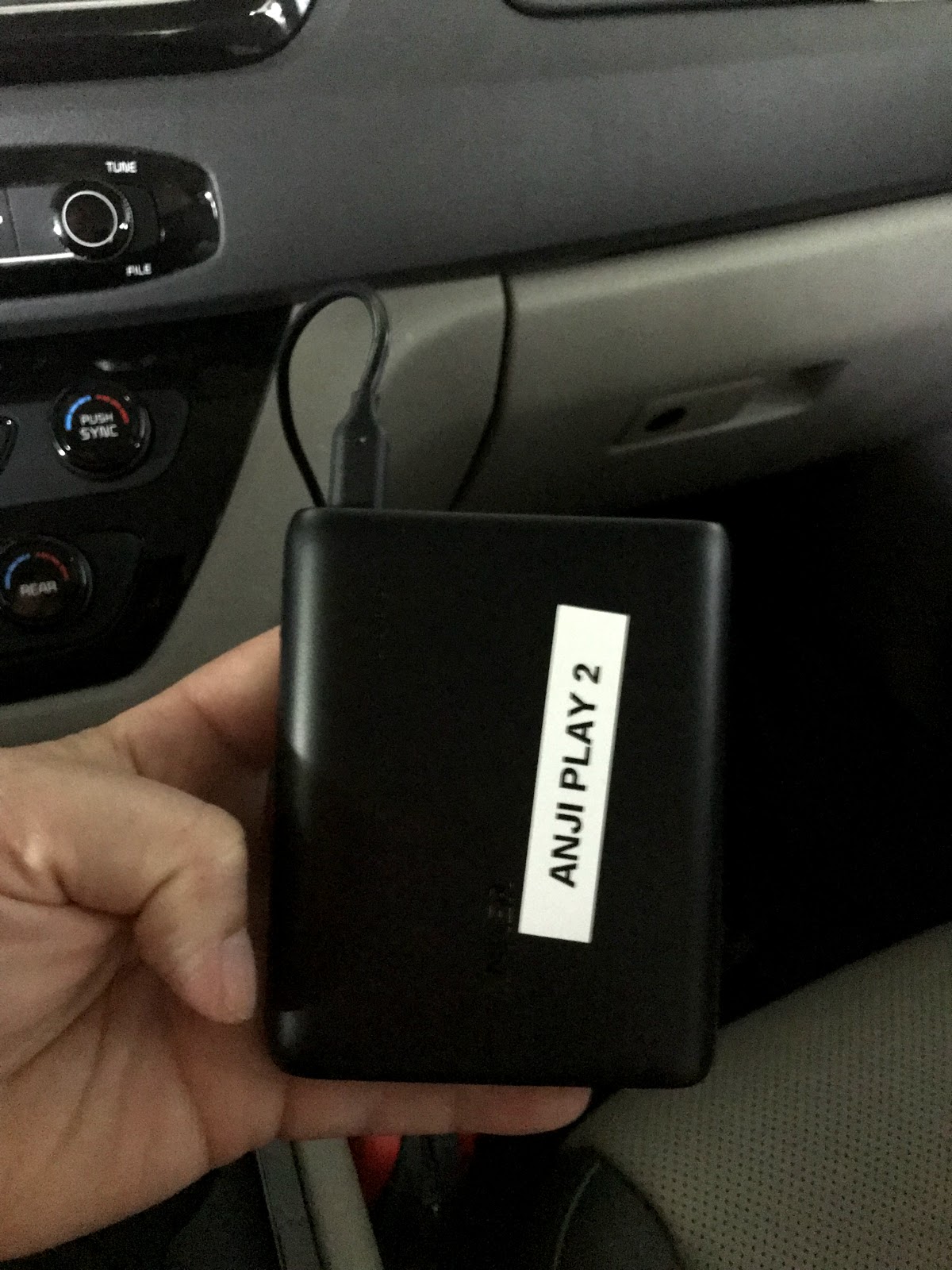
Another innovation by Holly Storck-Post! With an iPad that stays on the trailer for book circulation,  an iPod touch that stays on the trailer for volunteers to use to take photos during the program, the Sprocket Printer, a mobile hotspot and a bluetooth speaker, there's a lot of things that need to be charged at the parks.  And not all of the parks have power outlets.  Enter the portable battery pack.  Each of the lead librarians gets a battery pack that they can charge up between programs (I keep mine plugged in in my van) and then they can use that to recharge any and all devices at the park on their night.  The one we got is small and light enough to fit easily in my apron pocket while I walk around at the park, has two USB ports so I can charge multiple things at once and it holds enough power to charge up all of those devices if need be.  Plus, Ms. Cheng uses a battery pack whenever she's recording kids, so it must be the right thing to do.  :)
Verdict: BRILLIANT.  TOTALLY WORTH IT.


6. "Ladder" bookshelf:
We like to incorporate circulating books at our Wild Rumpus events (of course) and last year we were lucky enough to land MPL's Book Bike at two out of three weekly events (one park was too far to bike), but this year it didn't work out and so we were looking for something interesting to display books on (we've learned from experience that just putting them out on a table or a book cart does NOT garner much attention), but also something that wouldn't take up much room on the trailer and wouldn't be difficult to set up or take down.  Enter this ladder-y looking bookshelf from Displays2Go.  I love that it has a ladder tie-in and it meets all of our requirements.  Even ducks like it.
Verdict: usability is great (though it is a bit fragile), it remains to be seen whether we'll see much interest in book circulation.


7. Plank wagon:
The incredible maintenance crew of MPL worked together to design a new, sturdy plank storage and mobility vehicle for us.  Last year's design (my own design and construction) was tall, skinny and had to be strapped to a tree or a pole for fear of it tipping over and smooshing someone.  This year, they retrofitted an affordable and sturdy garden wagon with these modifications (see above).
Verdict: SO much easier to roll and way more stable!  We had one bolt fall off and this many planks on one wagon is VERY heavy and the kids are rather interested in riding around on it, so we'll see how it fares over the course of the summer.


8. DeWalt chests:
I bought two of these heavy duty black plastic storage "chests" to store and transport blocks.  I asked the maintenance crew to add two dividers to each one and drill small airholes on the sides below the lip of the lid so that no kids could get stuck in there for way too long.  I love that they have an extending handle like a suitcase and only one set of wheels so that they are less tempting for kids to dump all the blocks out and play bumper cars with them.  They can totally handle the weight of all these blocks too!  Sadly, we found out recently that our trailer is overweight (pro-tip: get a double-axle trailer!) and we had to remove some of the heavier things that aren't getting as much play and the blocks topped that list.  We did add in some mover's dollies to one chest and our Rig-a-ma-Jig Jr. sets for rainy day use to the other chest.
Verdict: Way nicer to use in every way than the wooden book trucks we hauled blocks on for the last few years, but might be overkill for what they're currently hauling around.

9. Staff lanyards:
Another Holly suggestion!  We got lanyards (with clear pockets that ziploc shut!) for all staff and volunteers to wear during the program that include their name and pronoun preference.
Verdict: I always forget to grab my official library nametag, but this one is easy to keep in my purse and bring every week.  Plus, they're cheap to buy in bulk in case someone forgets to bring theirs back they can make another one.
Verdict: Why didn't we do this earlier?


10: Whistles:
What do you do if there's a lost kid in the park?  Or some other emergency situation?  How can you get the attention of the lead librarian quickly or get the whole crew's attention for an announcement? Why a whistle of course!  Suggested by this year's awesome practicum student: Nicole Isaacs!
Verdict: haven't had to use them yet, but it's reassuring to have them there.

Last year's winning innovations that carried through to this year:
--Weekly Rumpus Reflections meetings with all staff and any volunteers who'd like to attend

--Weekly Rumpus Reports (one pagers with photos/stats/quotes/anecdotes and the adult tip of the week) that go to library management and program partners

 --Neon clothespins for kids without photo permissions (though I LOVE that Nicole Hershberger of Cicero Library is using tyvek wristbands instead of clothespins--so much easier to see!)

--matching staff aprons with pockets!  Makes us easier to identify as staff and gives us pockets to hold all of the different handouts and clothespins, etc.

Jun 21, 2019

A Wild Rumpus Returns!

I just realized I never posted this great summary video of last summer's Wild Rumpus program here on the blog:


This seems like a great opportunity to also remind you that this year's Wild Rumpus begins next week! Each program will run from 5:00-7:30 p.m., starting June 24 and going through August 15.  The Let's Eat Out food trucks will be at each event, or you can pack a picnic dinner.  Check the library's online calendar for last-minute weather cancellation announcements.

Mondays, Brittingham Park
Wednesdays, Haen Family Park
Thursdays, Reindahl Park

Jan 30, 2019

Why do we do Anji Play at the library?

https://drive.google.com/file/d/19xTWiQLOAnxMy9WgHsJ-Rrry_pOjvaV8/view?usp=sharing


I recently pulled together some research and reflections about why we do Anji Play at Madison Public Library. This is something I've thought about a lot over the past three years but I'd never put my thoughts and the research I've read all into one spot before. Click the image above or this link if you'd like to read through it!  Many thanks to UW Professor Rebekah Willett for helping me to organize my thoughts and pull together even more supportive research and to Holly Storck-Post, Rebecca Millerjohn and Jess Hankey for their thoughtful feedback.

Nov 14, 2018

Anji Play: Recording the entire arc of play

https://photos.app.goo.gl/U1QVvxFkh7Yc2h9HA

Frequently, over the past three years, I've taken videos of play and then when I share them with the Anji Play professionals they tell me the video stopped too soon or doesn't show the whole arc of play.  While capturing the beginning of a particular arc can be hard to predict, sticking with it until the end is a skill that can be honed. What does that look like? The 20+ minute video above shows a whole arc -- from the first frustrated attempt (a lucky catch on my part) until at the end of the video, he's going back for more and saying, "This is fun!"  Yes, that took 20 minutes.  And yes, there were a few distractions for me during that time, but I am so glad that I stuck with it and got this one long video so that you can see how the play evolved.

Many times, parents, caregivers, staff and volunteers have agreed to get some video of kids playing, but everyone starts to feel nervous when the play that is being recorded begins to stretch longer than a minute, then longer than 3 minutes, then longer than 5 minutes.... are you going to run out of space on your mobile device? (maybe...) Are you going to be able to share this video with anyone or will it be stuck on your phone forever? (I recommend uploading it to Google Photos and then deleting it from your device, then you can share it with anyone.) Do you really have the patience to stick with this one instance of play when there's so many other interesting things going on?  What if you miss something else amazing?  After three years, I've learned that you just have to rely on other people to catch the other amazing things.  Sticking with one group of kids playing until they are "done" with that particular play allows you to observe more closely, notice nuance, find patterns when you watch the video and have a better sense of the abilities, interests and personalities of each of the children involved in this play. My final tip is that even if you THINK the play arc is complete, continue to record for a little bit longer.  I can't tell you how many times I've stopped recording RIGHT before the kid said or did something really meaningful or interesting.  I'm slowly learning to just keep it rolling a bit longer.

What do you notice in the video above?  How does watching it make you feel? What are the children actually doing? What are they saying? What has changed from the beginning of the video to the end and how did they get there?  Watch this with open ears, open eyes and an open heart.  If you find yourself wanting to step in and tell them how to solve this or to shout "good job!" realize that that is perhaps a natural urge, but also totally unnecessary for these kids.  What's the longest video you've ever captured?

Sep 13, 2018

Wild Rumpus: Flying


 Another really common play pattern, especially in Anji Play is leaping, flying off of tall things, often onto a softened surface.  Here are some examples of jumping from this summer.


Here are some kids in Anji County, China leaping:
 Image may contain: 1 person, child, basketball court, tree and outdoor 


And here are some play stories from the Wild Rumpus about this kind of leaping:


Aug 9, 2018

Wild Rumpus Update: Adult discomfort with children's play


At one of our Wild Rumpuses this year, a group of kids turned the orange climbing cube into a jail. This is a pretty common play theme but with complex and specific details (like dates and hashmarks on the wall, discussion of "going back to court" and poor food rations), some of the adults watching the play felt a little uncomfortable. But there is immense value in children playing about a wide variety of topics, especially those that are full of challenging or difficult emotions.  Playing through these scenarios helps kids to work out how they feel, trying out different ways to approach the topic in their own minds.

I consulted with Dr. Lawrence Cohen, licensed psychologist specializing in children’s play and author of Playful Parenting and he pointed out that, “For some [children] the theme is actually jail.... For more, the theme is "who is in control," which is a deep theme for all children (given the limits on control that children have over their own lives—which is something this general kind of play is meant to contradict). School can feel like a jail to many children, so jail play is often a way to work through school-related emotions, especially for older children who are not likely to "play school" the way younger children do….Aggressive play often plays with the theme of control (or lack of control) over one's own impulses, and how to handle threats and adversity in life. Important themes! Banning this kind of play is like telling children: no, you can't think about such areas of life. But play is their philosophy class, their practice in moral reasoning, the extension of their highest order levels of thinking.” [emphasis added]

In his book Free to Learn, Peter Gray says, “Even children who have never experienced any particular trauma, beyond the little ones that everyone experiences, often play at emotion-arousing, traumatic scenes.  In doing so, they may be steeling themselves to deal with all sorts of unpredictable but inevitable unhappy and painful events.” (p.170)

 [the jail]

So how should we as adults respond when these situations arise?  

Step 1:  Watch and listen to what is actually happening (NOT what we think is happening).

I strongly recommend recording a long video because when you go back and watch it later, you’ll be able to see more than you will if you just rely on your memory (which will be tainted by your own emotional reactions to the play).  If someone is in danger of being seriously physically hurt, YES you should step in to ensure safety, but aim for minimal intervention. Listen to what the kids are saying during play -- what looks like one thing to us might be something totally different to the kids who are playing and THEY are the only ones who can tell us what they were really playing.

Step 2: Pay attention to the kids’ emotions.

Dr. Cohen says, “Many adults have trouble telling the difference between real violence and aggressive play. I will give you some suggestions on how to tell them apart. Healthy aggressive play, like all play, is consensual; everyone agrees to be part of the play. In situations of real violence, one child hurts another without their agreement or consent. Aggressive play is meant to be fun, and it is. You will see joy on everyone’s face and you will hear laughter. Aggression is meant to be hurtful, and it is. At least one person ends up miserable, angry, or upset.”

In this particular scenario, none of the children involved showed signs of agitation or distress. Despite some in-character scolding, it was clear that no one was actually angry.  When adults are feeling anxious about the play, this is one element to watch for. If some (or all) of the children involved are clearly NOT enjoying themselves, it doesn't necessarily mean that we as adults need to put a stop to the play, but instead we should watch very closely, step in if children are actually getting harmed (physically or otherwise), but if they're just arguing, let it play out and then talk about it with the group after the play is finished.

 ["FREE DOM!"]

Step 3: Pay attention to your own emotions.

Pay attention to your own internal reactions (but try to keep them internal for now.  I KNOW it's hard!). Just recognizing that part of our discomfort lies in our own feelings about the uncomfortable topic is a huge step. Do we have a personal history with this topic? Have we already formed strong opinions and beliefs about this topic (remember, kids are still figuring out their own opinions and beliefs!)? If it’s too challenging for you to watch, is there another caring adult present who can be the careful observer so that you can step away to manage your own anxiety levels?

Step 4: After the play is done, show the video to the children and ask them to talk about their play.

Listen to the kids afterwards and pay attention to what they say about the play, this is the best way to have insight into their experience and to find out what they were thinking and doing.

["git me out"]

Playing through difficult subjects is how kids figure out how their world works. There is great value in children having the chance to work through play that is meaningful and important to them. Sometimes those meaningful things are difficult for adults to watch. We may not know why the kids are playing in these ways, but it’s important to know that for whatever reason, this kind of play is essential to their development. It is a form of highest respect to give them the space to play, even when it makes us uncomfortable.

Jul 28, 2018

Wild Rumpus Update: The Trailer!!


Last year, we received grant funding that allowed us to purchase a trailer to store and haul Anji Play materials in.  This was a huge upgrade from the previous year when materials had to be loaded and unloaded twice each time we did the program (loading at the storage site/unloading at the park, then vice versa).  Now all we had to do was unload at the beginning of the program and pack it back into the trailer at the end of the event, then drive it to our parking spot and it was ready to go for the next program.  Hurrah!  But it was plain white and gave no indication of the fun stored inside.


This year, we received grant funding from the Madison Public Library Foundation that allowed us to install a beautiful new trailer wrap!  We wanted to incorporate kids' artwork into the design, so we left some blank spaces (the monster's thought bubbles) for the kids to design.  We're working through a few different iterations of the best way to attach this rotating art collection onto the sides of our aluminum trailer, but the kids are making some AMAZING art and they're so proud to see their art on the trailer.


 "These are monsters and the round things are rocks.  They eat the rocks"

"sliding on slides" (sorry, I can't remember whether this artist told me if these were monsters or people, but I just love those ladders and slides!)
 (second artwork iteration: clear contact paper! lesson learned: dry erase wipes off really easily, especially when you have to smooth the contact paper down to the trailer surface.  sigh.)
I'm so excited that my little 2" tall sketches have grown into these huge monsters that work surprisingly well for so many different types of printed media.  Awwww!


Jul 27, 2018

Wild Rumpus Update: Making Signs

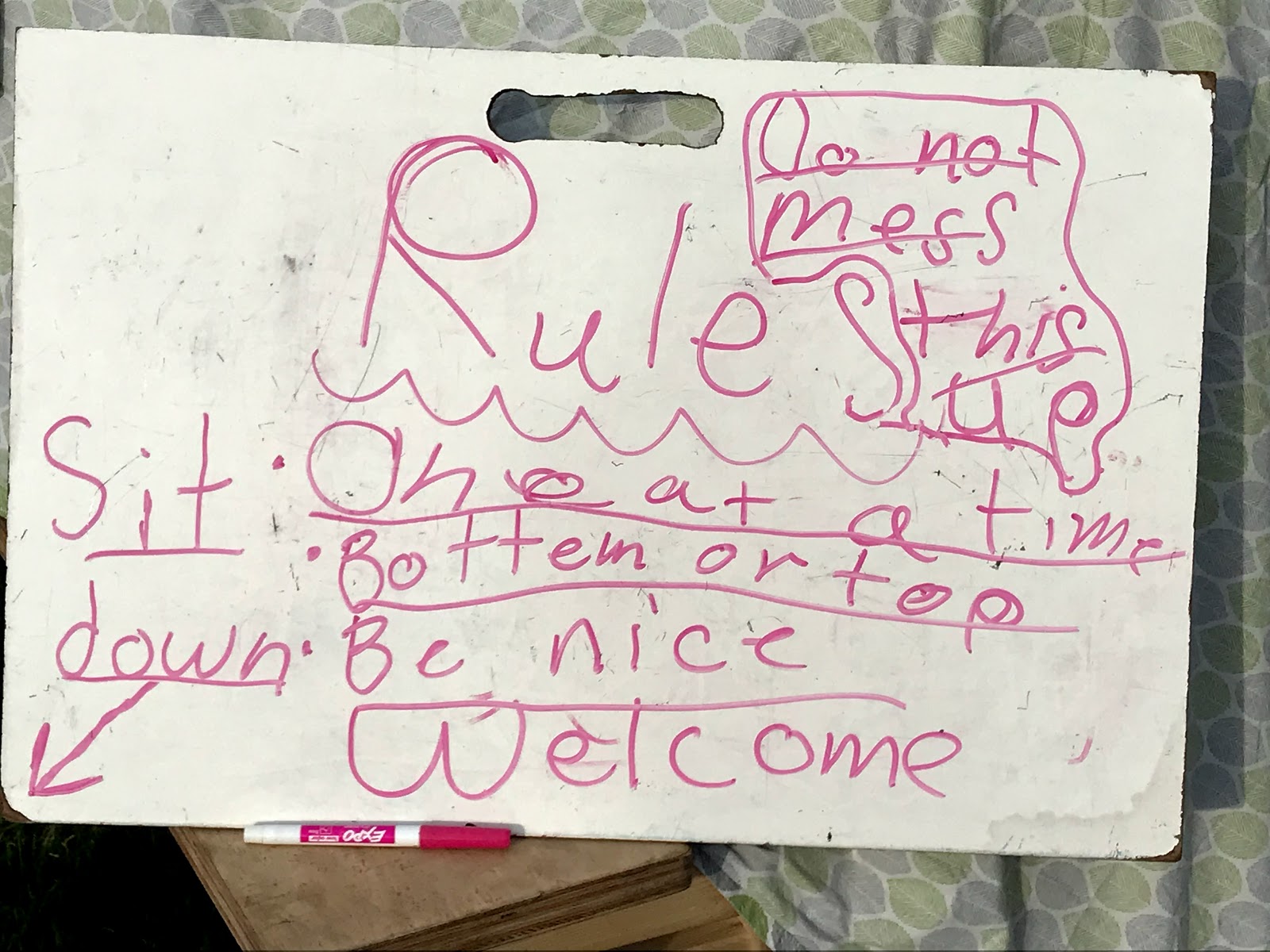
You may have noticed in the previous blog post about forts that there were a few signs hanging around the edges.  I've been totally fascinated by the signs (and other examples of written words) kids have been creating at the Wild Rumpus this summer.  Since Writing is one of the 5 Early Literacy Practices of Every Child Ready to Read-- this pattern of play is especially exciting to me!  I added these whiteboards last year, inspired by the play-planning boards that the kids in China were incorporating into their play, but right away, the kids at my programs deemed them perfect for signage.  That pattern has continued this year.  Here are some of my favorite examples:


Check out that amazing vocabulary!  The inventive spelling!  The complex group discussions that clearly happened around creating the fort rules! The thoughtfulness around risk! The desire for a kid-driven space (stay out, adults!)!  These signs bring me a deep sense of joy because I see the complexity behind making them.

p.s. I made these whiteboards by cutting 2x6' panels of whiteboard into three equal pieces and then using a hole saw + a jigsaw to cut a handle from the top.  They were inexpensive to make and have held up very well.

Jul 25, 2018

Wild Rumpus Update: Building Forts

One of the things we look for in Anji Play is patterns, so this is the first of a few blog posts about some patterns of play that I've noticed this summer.  Almost every Wild Rumpus that we've held this summer has some form of fort building (or house or club or similar).  Here's some examples of the wide variety that kids have created:


 There have also been some amazing play stories drawn (and written) about these forts.  Here are a few examples:

Why do kids build forts and other special places?  What are the benefits of building forts?  Here's a short blog post about it.  What about you?  Did you build forts when you were a child?  Leave a comment below -- I'd love to hear about it!


Template developed by Confluent Forms LLC; more resources at BlogXpertise