Then, leave me a review in iTunes (or wherever you get your podcasts from) or leave a comment here on this post and tell me what you think! Do you have a favorite app developer you'd like to see interviewed? Do you have a burning question you've always wanted to ask app makers? Do you think I giggle too much during the interviews (hint: yes)? Chime in!
In which more children begin to interact with each other.
This week, some things were built. Some kids preferred to build alone, others built with the help of another kiddo.
Here's some more fun play with the tunnels. Her mom told me that this was the first time that she made the tunnel flat by herself (usually she asked mom to do that part):
The paper-covered table offered a nice large surface for drawing on!(note: I found out during play reflections the following week that this is a drawing of a washing machine. And the circles on top are all the clothes.)
This was an interesting way to use the turntable!
Please note: "Anji Play,” refers to a specific philosophy and comprehensive approach to early education developed by Ms. Cheng Xueqin in Anji County, China. I use the term "Anji Play" to describe my programming and throughout this blog with the explicit permission of Ms. Cheng because our programming has been developed as part of a close collaborative relationship with her and her team of Anji Play educators. If you are interested in learning more about how you can bring Anji Play to your community, please visit www.anjiplay.com
With bizarrely pleasant February weather, we just couldn't stay inside the whole time! This week's play spilled out onto the back sidewalk, but first, we started inside.
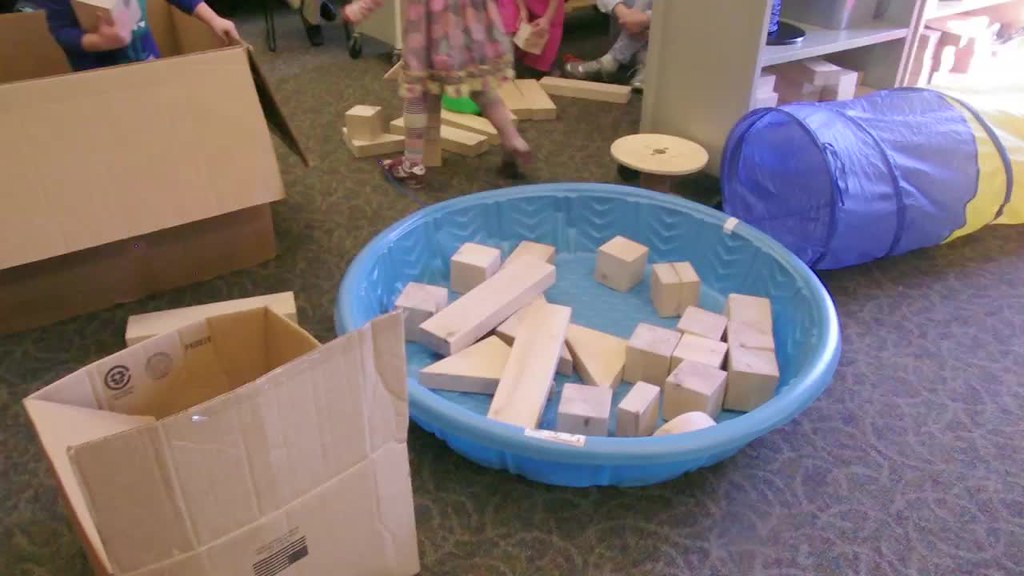
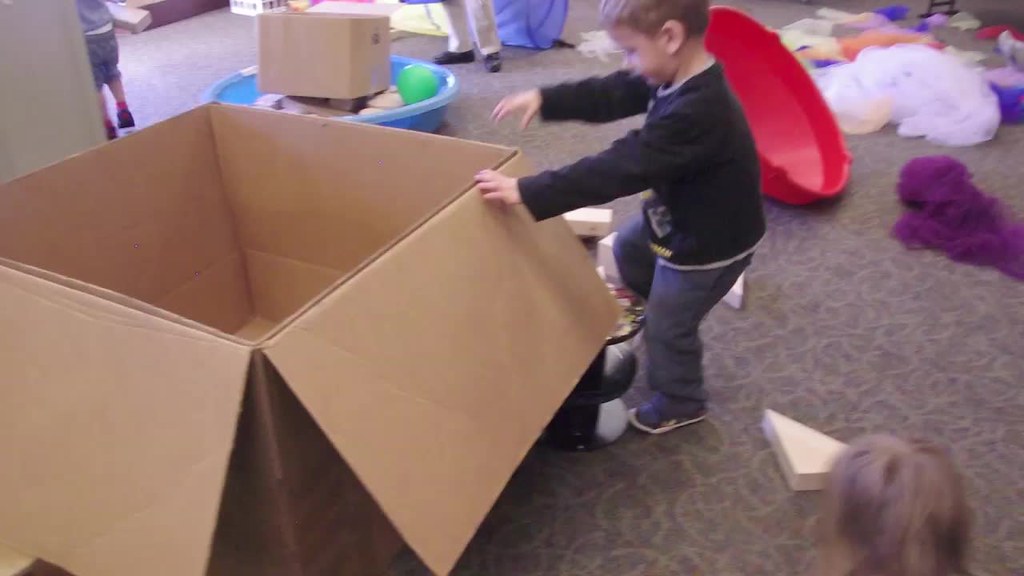
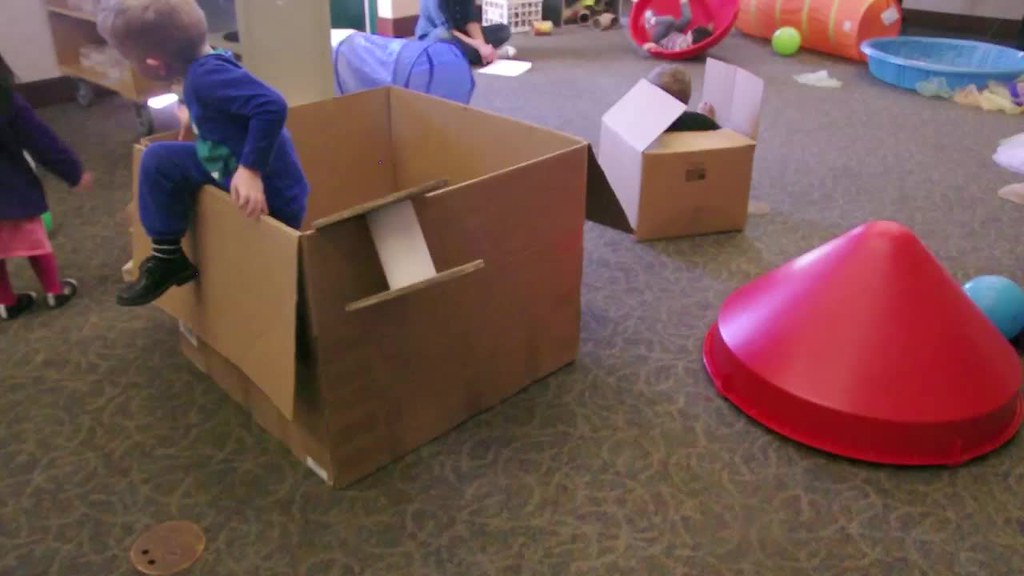
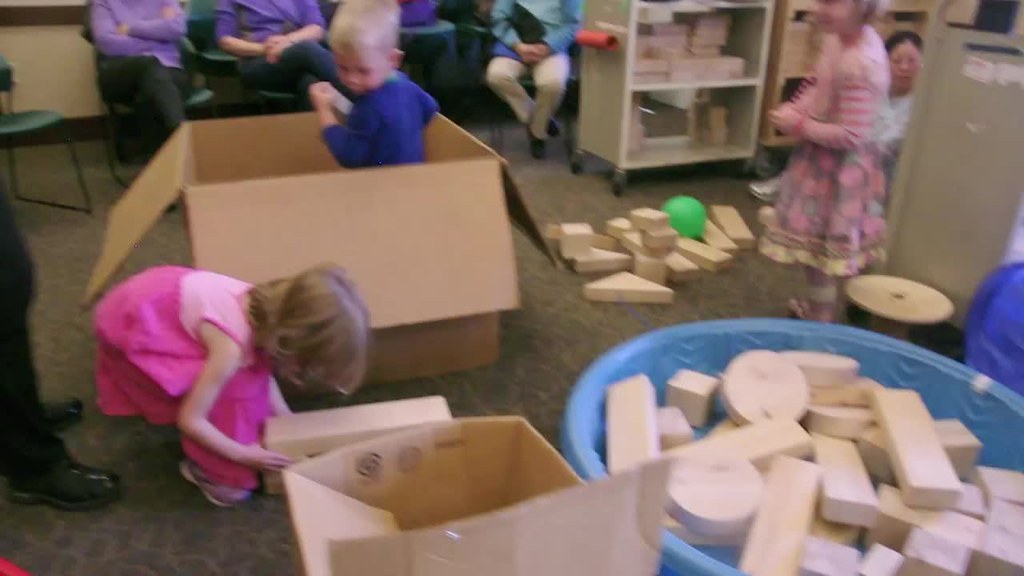
The cardboard box saw a lot of activity this week, especially with blocks being loaded in and tossed back out.
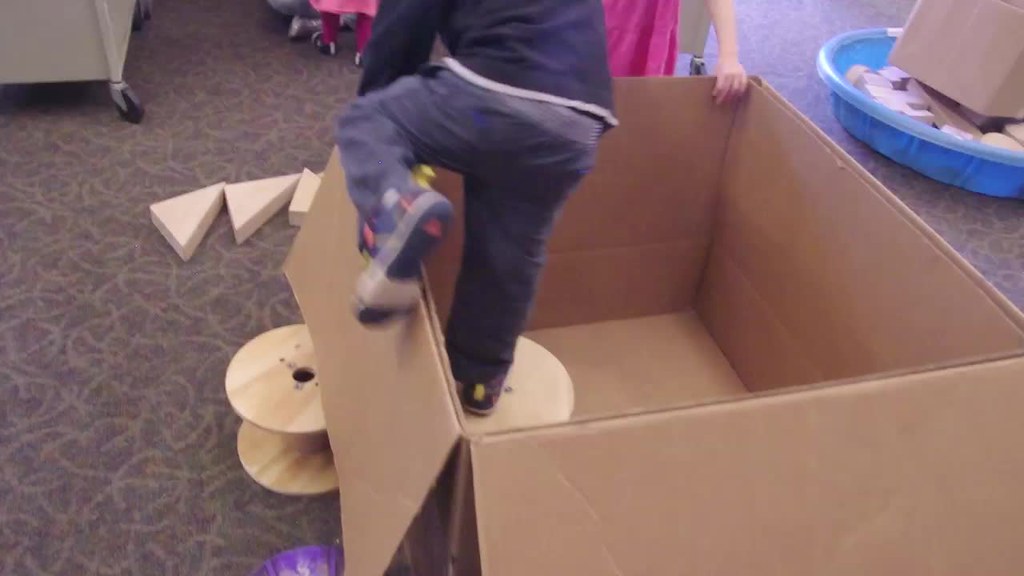
And people being loaded in and clambering out
This child was struggling to get out of the box until his sister set up a spool inside and outside the box.
Later, he tried two spools. Notice how he adjusts to make it safer (food for thought: do you think he would have made the adjustment even if an adult hadn't said, "careful!")
I love this video of three (maybe four!) different ways to be inside something.
Check out the awesome, "I did it!" expression and gesture below as this child got cylindrical blocks onto all of the blobs of clay:
These pop-up tunnels have proven to be quite versatile!
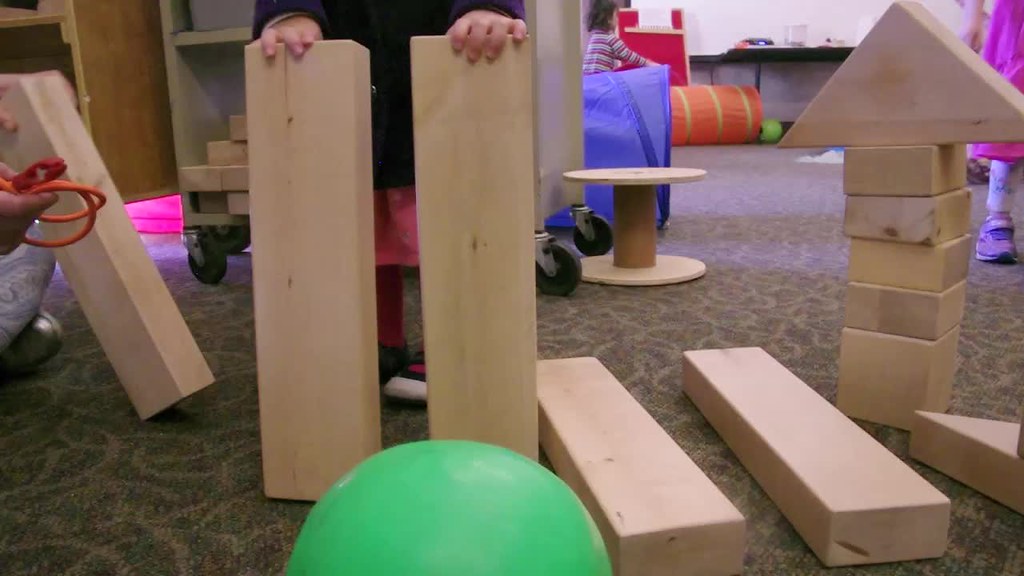
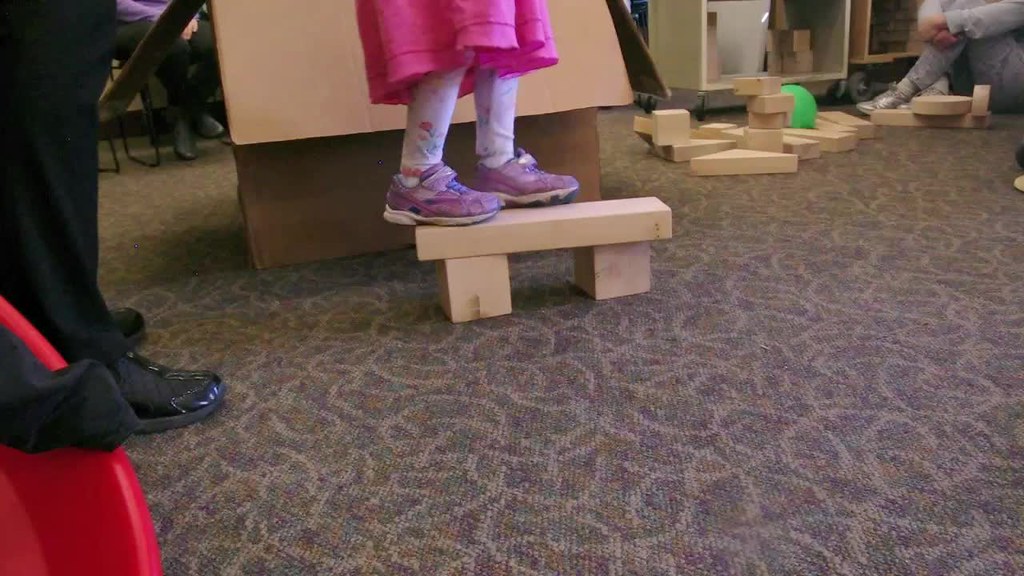
This week's block play saw some studious building:
(keep an eye on the bottom left corner of the video below)
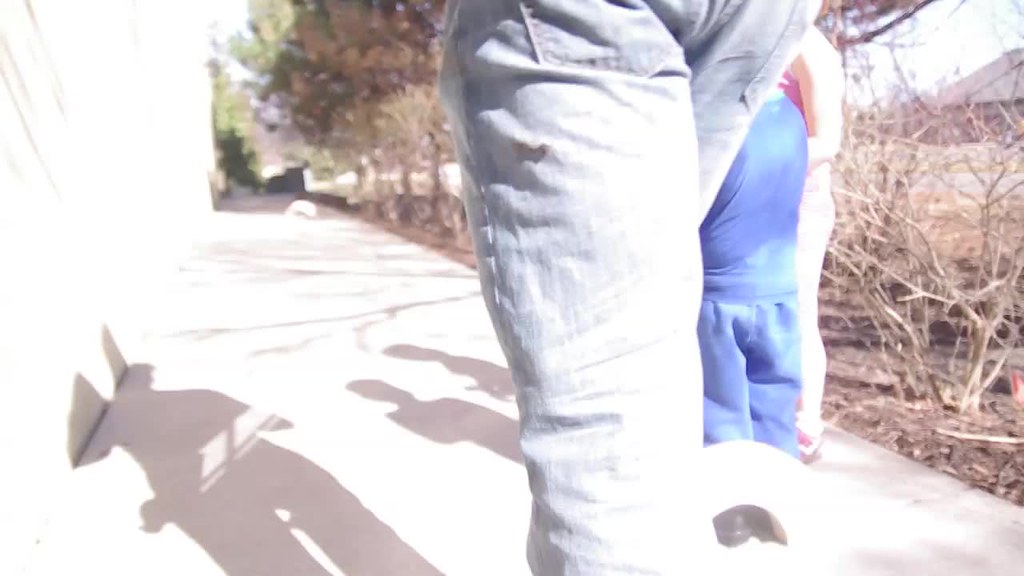
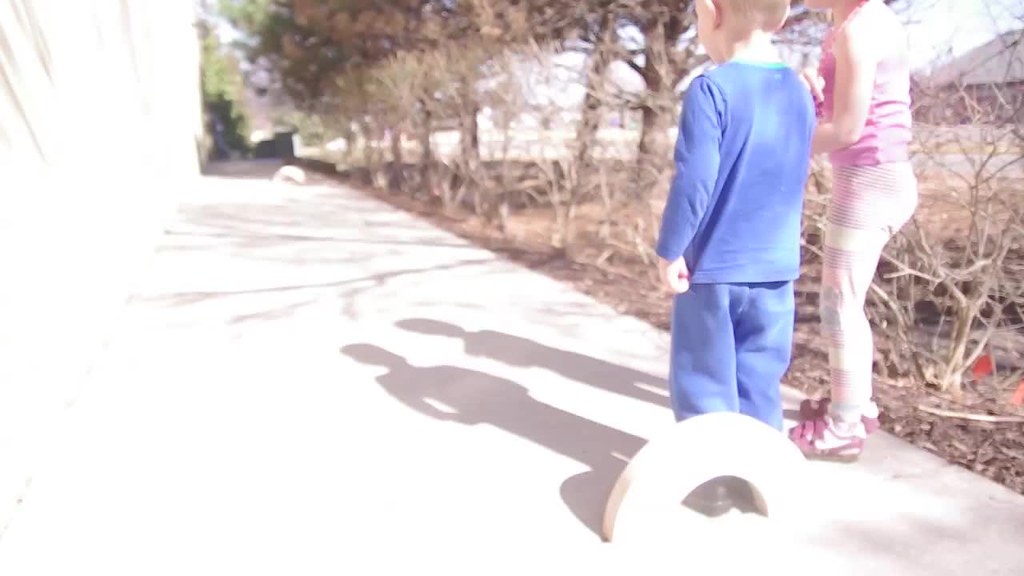
And then the block play moved outdoors:
In this photo, a younger child was trying to knock over his structure, but instead of shouting or pushing, he simply placed a firm hand on top of his tower to keep it steady (and to mark his territory) until the younger child moved on.
The blocks were also incorporated into a racing game. First video is the set-up of the rules of the race, second video is the race itself.
and some lovely pieces of nature were scavenged.
There were some fantastic adult reflections this week and some great drawings by kiddos too. I hope to add some of those in this space soon!
Please note: "Anji Play,” refers to a specific philosophy and comprehensive approach to early education developed by Ms. Cheng Xueqin in Anji County, China. I use the term "Anji Play" to describe my programming and throughout this blog with the explicit permission of Ms. Cheng because our programming has been developed as part of a close collaborative relationship with her and her team of Anji Play educators. If you are interested in learning more about how you can bring Anji Play to your community, please visit www.anjiplay.com
Occasionally adding new elements to the play adds new explorations.
This week, we added brown paper covers to the tables where the markers and play story notebooks are used. Kids enjoyed this large "canvas" for their artwork and we also didn't have anyone draw their play story on a loose sheet of paper this week (something that happened a few times before -- not a huge deal, but it's easier to keep track of an individual child's drawings if they're all attached to the same notebook)
The markers were dumped onto the floor almost immediately. Several kids, trying to walk through them, experienced the slippery, roll-iness of markers. The parents and I discussed whether or not to clean up the markers to avoid more falling. In the end, because the kids didn't seem to be engaged with exploring that slippery, falling feeling, but more experiencing it as they ran through on their way to something else, we decided to pick them up and to ask the kids (who'd dumped them) to help us pick them up. I was concerned that this was interrupting his flow of play (as he'd moved on to a different activity by then), but I also wanted to encourage him to be responsible for cleaning up his own supplies when he was done with them. This is all such a balancing act of trying to figure out when to step in and when to step back! I still question my decisions each week. How about you? What would you have done?
He did enjoy the challenge of getting the lid off the container by himself! One of my favorite little moments during this activity was when he accidentally picked up a short, cylindrical wooden block and a marker that was missing a top and he tried to put the block onto the marker as the top and it took him a moment to figure out why it wasn't working.
These girls loved exploring the table from on top!
I caught a short instance where our "cutter" from last week was reprised as a seat again:
And (although it's hard to tell from this photo) there was some rolling action going on, rolling these cylindrical blocks down this wedge-shaped block.
This little one is exploring ropes and clamps and how, depending on how you position the clamps, they can either slide along the rope or hold it tightly. This was his first AnjiPlayDate experience and his mom and I had a great discussion where she talked with me about how challenging the "hands down, mouth closed" rules are (I know! They're a huge challenge!). She tried an interesting response when her son was struggling with another child and looked to her for help (because she generally would step in and help the kids mediate their struggle). This time, she just looked back at him and shrugged and smiled. This response allowed him to decide for himself how he wanted to respond and whether it was worth continuing the argument. He chose to just walk away and try a different activity. She noted that how we respond, emotionally, to conflicts like this strongly influences our children's responses.
"Filling and emptying" is a very common activity for children and it manifests in many different ways. Check out the block play examples from this week below:
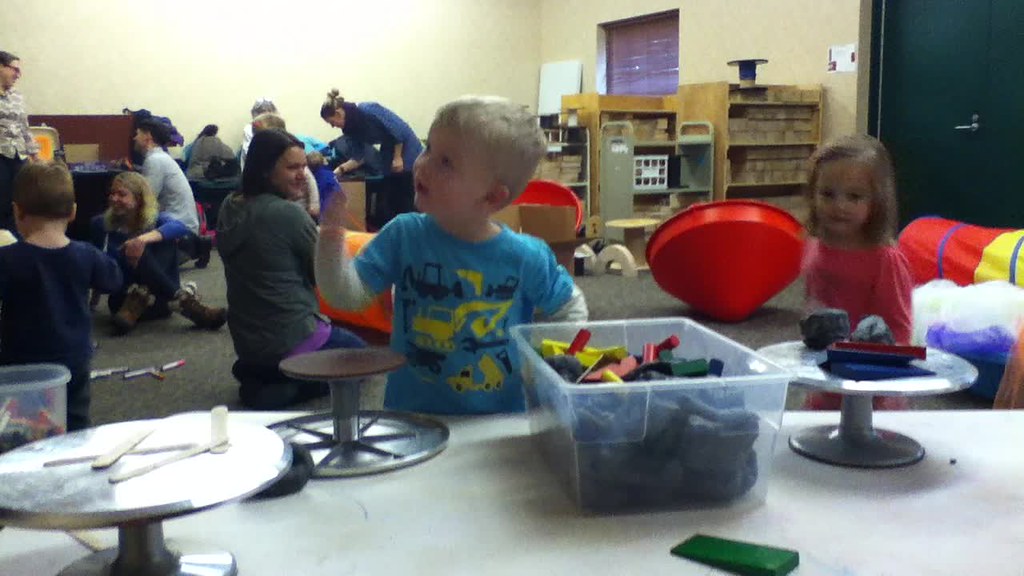
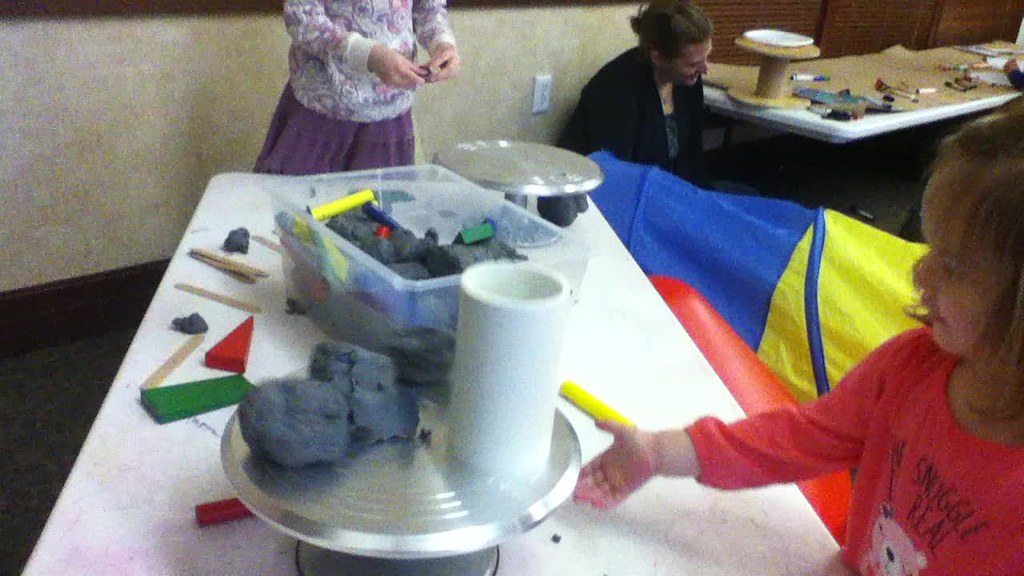
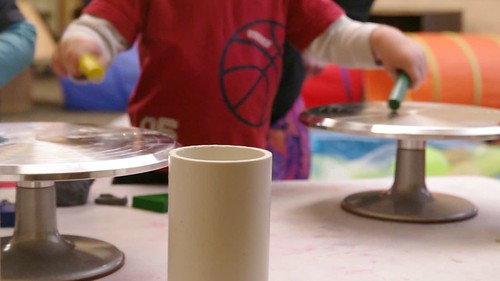
The biggest new element we added this week was three rotating cake decorating stands. I added them to the clay table and here's what they did (the videos, especially the second, are quite long, but FULL of really interesting play. What parts do you find intriguing?):
Here's a play story from this week:
Please note: "Anji Play,” refers to a specific philosophy and comprehensive approach to early education developed by Ms. Cheng Xueqin in Anji County, China. I use the term "Anji Play" to describe my programming and throughout this blog with the explicit permission of Ms. Cheng because our programming has been developed as part of a close collaborative relationship with her and her team of Anji Play educators. If you are interested in learning more about how you can bring Anji Play to your community, please visit www.anjiplay.com